

本站推荐电影
-
·6年倒闭8万家KTV!曾经爆火 为啥年轻人现在不想去?
·A-史密斯:威少虽然无冠 但个人成就值得铭记
·马斯克母子再赞中国!上海是一座很棒的城市 强烈推荐游览
·快船以非鸟特例续约比尔 2年1320万含球员选项
·温网综合:纳达尔艰辛五盘胜 哈勒普横扫进四强
·李대통령, 네팔 한국인 실종에 “실종자 수색·구조에 총력”
·雷军:红米红米新机器可以现货购买
·以租代买”解锁消费新玩法(消费新知),以租代买”解锁消费新玩法(消费新知)
·游子归鲁!山东男篮官宣:球员王岚嵚正式加盟山东高速男篮
·宝马推行全国统一价销售模式,新世代iX3首搭
·以党建为引领 推动抚顺文艺事业繁荣发展 ——抚顺市文联成立70周年文艺工作综述之一
·两岸媒体人走进山西晋城体悟华夏同源
·Mocky的新游戏手机:带有6000 mAh电池的PS VITA
·宠物中心负责人遭30公斤大狗袭击,2小时后身亡,详情披露
·2026湘湖半马将于10月18日鸣枪起跑
本站推荐电视剧
-
·高光褪去CXO产业如何走出“围城”
·AI办公三强争霸卡位战:腾讯先发占入口 阿里整合攻B端 字节提速推豆包
·再分化!煤炭、银行大幅跑赢 该买红利资产了?
·汉奸行径!日本政客参拜靖国神社,民进党当局竟表示“尊重”
·陈振声:创新助推危机化为转机 推动我国进一步迈向成功
·属相和董事长不合就要被裁员?民生人寿回应
·安卓最强2nm芯片易主!三星Exynos 2700内部实测跑分力压高通第六代骁龙8超级至尊版
·谢林汉姆:不明白为什么解雇波切蒂诺,他是最适合热刺的主帅
·“人才夜市”来咯!
·菲尔・杰克逊炮轰联盟在“神圣节日”安排赛事,言论引发轩然大波
·受强降雨影响 南铁启动防洪Ⅲ级应急响应 动态调整开行方案
·过去十年最大转会利润俱乐部排名(不含青训):里尔4.36亿欧居首
·来景德镇景区能获得哪些陶艺相关体验
·Windows10最适合下载深色墙纸:“经典XP”极乐,海滩夜跑
·叫板国乒?张本智和谈亚运目标:冲击3金
电影下载排行
-
·NBA季后赛:库里31+6勇士大胜火箭1-0 范格34中7巴特勒25+7
·2025 年国补和 618 活动能否叠加?国补政策什么时候结束?多地家电“国补”暂停?2025国补政策补贴标准最新消息
·三月小心“左右踩坑“
·International community should jointly reject and check Japanese right-wing forces’ dangerous pursuit: Chinese FM spokesperson
·300607切入光通信赛道!碳酸锂价格触底反弹 7股上半年业绩翻倍
·789元秒杀戮,牟隆660:360 N7 Lite手机年庆典蓬勃发展
·中国男排主教练吴胜:解决“发接发”,备战世锦赛
·False alarm: Institute apologizes for initially issuing 7.7-magnitude earthquake alert in Sichuan for much smaller jolt
·Washington, DC & New York City Run Out of Monkeypox Vaccines in Less Than a Day
·Immersive heritage shows draw visitors to Tianmen Mountain in Hunan
·世界杯决赛历史首次!这10 分钟变动或影响冠军归属
·“三无”产品变质致宠物死亡 宠物食品为何频频“翻车”?
·2026宁夏民营企业百强榜单于石嘴山发布 民企方阵实力稳步攀升,2026宁夏民营企业百强榜单于石嘴山发布 民企方阵实力稳步攀升
·国产《古神风里希》登科隆!巨物神似"金箍棒"
·小米车生态周边上新开售!多功能家用充电桩2999元
电视剧下载排行
-
·阶级跃迁的幻觉,破灭了
·瑞凌股份:聘任王朝阳为公司董事会秘书
·国际刑事法院终于硬气了一把,没想到让自己更憋屈
·AI变革将是未来十年的周期
·新三板基础层公司赛若福大宗交易溢价85.71%,成交金额90.01万元
·三战130分钟无愧铁人!季后赛巴创纪录比肩MJ 3年1.6亿值不值?
·Transcript: Commerce Secretary Gina Raimondo on "Face the Nation," September 3, 2023
·全球一周PS抵制活动开启!索尼回应让玩家寒心
·1.14财富袋精华:云闪现金红包加密码,1元包裹邮寄QQ小男孩
·2 generals purged from Myanmar's military government sentenced to life for corruption
·Russia's Top Diplomat Slams West for Relentless Efforts to Dictate to Other Countries
·机构:上半年全球储能电芯出货量超460GWh,同比大增约94%
·AI重塑千亿级产业逻辑 钱塘如何抢占“AI+医药”新赛道?
·名帅有能,战胜火箭后勇士主帅科尔迎执教生涯季后赛第100胜
·“金九银十”,寂静的旺季
千金女佣
-
发布时间:2026-08-26
萝莉
北京国管与工信部中小企业发展促进中心开展座谈交流_我的网站

A | 据北京国管消息,8月25日下午,工信部中小企业发展促进中心主任翁啟文一行到北京国管开展座谈交流。北京国管党委书记、董事长潘金峰主持会议。
Chinese scientists have developed a “brain-reading” AI model that could help predict the risk of depression among adolescents up to four years in advance by analyzing how humans respond to facial expressions, a technology expected to inspire future development of embodied intelligent humanoids capable of perceiving human emotion and thoughts through nuanced facial cues.
WHO data show that around 332 million people worldwide have depression, about one-third of whom have treatment-resistant forms of the condition. In China, an estimated 95 million people suffer from depression, National Business Daily reported, citing statistics from the China Mental Health Survey.
Using data from a population-based longitudinal adolescent cohort recruited across several European countries, the research team led by Lu Han, assistant professor at the School of Artificial Intelligence, Shenzhen University, has built an AI model that predicted which 19-year-olds were more likely to develop depression at the age of 23. The predictions were backed up by an independent clinical cohort of individuals with depression. The team’s paper was published in the journal Science Advances this month.
According to Lu, the study used brain scans taken at age 19 to predict depression-related symptoms at age 23. The study focuses on adolescence because the transition from adolescence to early adulthood is a key developmental period when depressive symptoms can increase rapidly. The earlier risks are identified, the greater the opportunity for prevention, Lu told the Global Times on Monday, adding that the findings need to be further validated in middle-aged and older adults and across different ethnic groups in future research.
In this study, the researchers analyzed data from adolescents in the IMAGEN, a population-based longitudinal cohort recruited across several European countries. At age 19, participants underwent an fMRI emotional-face task, and their emotional symptoms were assessed using standardized questionnaires. Genetic data obtained from blood samples were also analyzed, and participants were followed up at age 23. The researchers examined whether neural representations of angry faces at age 19 were associated with emotional symptoms and could predict elevated emotional symptoms four years later.
According to Lu, people without depression can more easily distinguish emotional changes based on others’ facial expressions and respond accordingly – for example, responding with friendliness to a smiling expression. But people with depression cannot do this, and are more likely to assume people are angry with them.
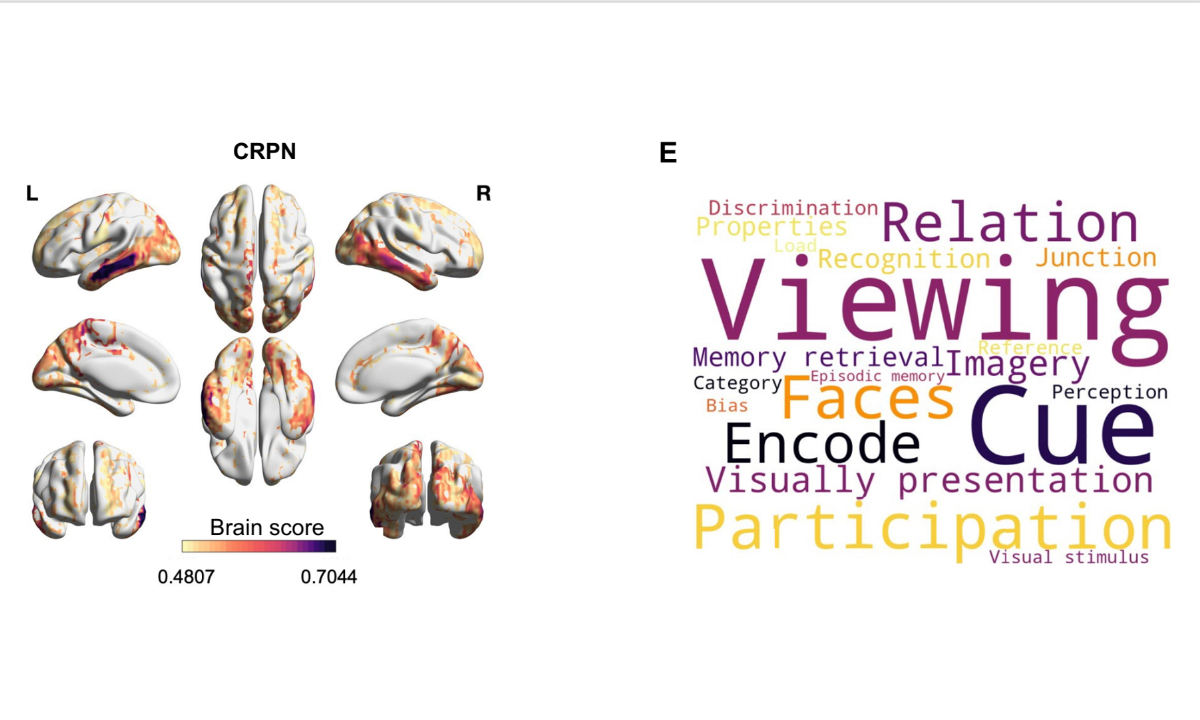
A brain-aligned deep-learning model developed by Lu’s team suggested that those participants whose brains were less able to distinguish between different facial emotions and tended to perceive others as angry were more likely to develop symptoms of depression and anxiety in adulthood.
The hypothesis that adolescents at risk of depression may respond differently to other people’s facial expressions than those without such risk based on the negative information processing bias long observed in depression research: people at risk of depression are more likely to notice, interpret, or remember negative social information, Lu said.
The researchers focused on angry facial expressions because they signal social threat and rejection, which are closely linked to interpersonal difficulties and negativity bias associated with depression. They hope to further understand how this bias develops within the visual system.
Building on this, they created a deep learning model, which mimics how the brain processes visual information, to predict how the brain encodes abstract emotional concepts such as anger.
They found that 19-year-olds whose response to facial expressions was skewed in favour of negative emotions or memories were the most likely to develop some form of depression.
Based on these findings, Lu’s team then developed a marker that can identify possible warning signs.
According to Lu, the study found that the computational biomarker was linked to the depression-related variant rs11123030 and polygenic risk for depression, suggesting that genetic susceptibility may affect emotional perception. It also provided predictive information beyond family stress and socioeconomic factors, complementing rather than replacing environmental risk factors. Therefore, depression is neither purely genetic nor purely psychological, but a complex mental disorder arising from the interplay of genetic susceptibility, brain development, emotional and cognitive processes, and life experiences.
According to Lu, the study is also expected to advance AI by aligning deep neural networks with human brain activity and using parameter perturbations to probe neural mechanisms, allowing models to both predict and explain how biases may arise.
The findings suggest that future affective computing and embodied AI should go beyond simply labeling facial expressions, incorporating visual details while preventing prior assumptions from overriding real-time sensory input, Lu said, adding that the findings could provide valuable insights for developing more interpretable robotic perception systems that more closely emulate the way humans process emotions.
。双方围绕优质企业发现、科技成果转化、投后服务赋能等重点工作深入交流。潘金峰表示,北京国管立足服务国家战略和北京国际科技创新中心建设,构建资本运营生态,增强主业竞争力,搭建科技成果转化服务平台,希望通过规模化、体系化、市场化以及线上线下相结合的方式,推动科技成果转化业务的产业化进程。平台围绕“找技术、找人才、找资金、找项目、找场景、找政府、找服务”七大需求,整合利用多方资源,广泛链接创新主体和创新要素,与工信部中小企业发展促进中心有着广阔的合作空间。下一步,双方可以把科技成果转化作为重要抓手,强化央地合作、部企合作,结伴而行,立足北京、面向全国拓展业务,共同打造优质企业培育与全周期投资服务协同联动的科创发展生态。翁啟文表示,工信部中小企业发展促进中心始终致力于服务全国中小企业高质量发展,全力推进中小企业服务“一张网”建设,锚定优质中小企业梯度培育核心任务,扎实开展“创新成果播种行动”,广泛汇聚政策、人才、资金等多领域服务资源,帮助中小企业突破发展瓶颈,实现跨越式发展。希望双方进一步加强沟通协作,充分发挥各自优势,为中小企业走专精特新发展道路、实现高质量发展提供更加优质高效的服务。北京国管副总经理梁望南参加会议。
Current article:http://urem.zangjiwuqihuncongcherua.cyou/pn4un/20260826/2188479.html
Published on:08:45:49
下载地址2:点击进入迅雷高速下载 温馨提示:邀请好友一起下,可提高下载速度,若遇无法下载,可另选时间尝试或重装软件!
下载方法:安装软件后,点击即可下载,谢谢大家支持,欢迎每天来!